
One Mark for the First Basket
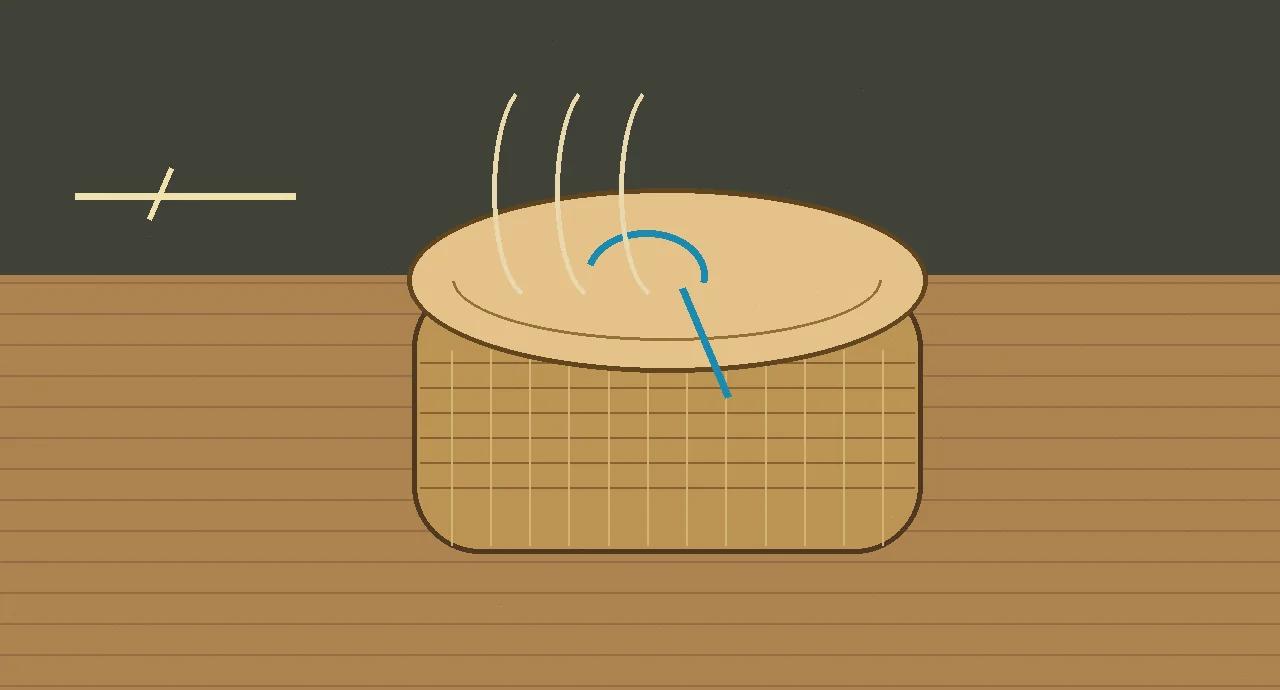
On the first turn of our breakfast-stall prototype the vendor has one basket to watch, one place to set it down and one visitor waiting just beyond the awning. Adding a second basket takes very little space on the page. It changes what the player needs to remember. A circle on the order board could mean the first basket has been checked, that it can move, or that the space in front of the waiting visitor has already been assigned. Those are three distinct bits of information. If one mark is expected to hold all of them, the next drawing becomes difficult to read.
This note follows a decision in The Lid with a Blue Tie. It starts with a paper order and ends at the serving edge. At each point we can see what is allowed to change and which clue should stay in its place.
Start with a stroke beside the order
On the preparation board, the vendor makes a short chalk stroke beside the line for the basket they are working on. The stroke belongs to the order. It remains there if the player checks the lid, sets the basket back on the table or spends a turn looking at the waiting visitor. The mark is small enough to read as a note made during a shift. The interface keeps the order label close to the stroke to make that connection plain.
A second mark at the shelf was initially drawn the same way. Clear in a close image, the two marks became interchangeable when the prototype moved to a wider view. A player could recognize the mark and still be unclear about which side of the stall it belonged to. We changed the shelf cue to a long stripe over the bevel. One stroke now reads as information about an order. The long stripe indicates a boundary on the wood. A short pause between decisions gives the player room to check both.
Leave the object its own clue
The ribbon connects two pictures of a physical object. You can see it when the basket is close to the steamer and again after the basket has moved toward the visitor. The ribbon carries no information about how long the visitor has been standing in the street. This distinction lets the table hold another basket without requiring the player to learn a single symbol for everything the first basket has done.
For a small comparison exercise, stay beside the steamer until the first basket moves, then look at the board from the shelf. If the picture changes but the stroke appears beside the original order, the player has an opportunity to check the sequence. In a run where the basket stays behind, there is still something to compare. The stroke sits beside the order. The ribbon is still in its prior location.
Look at what a visitor can see
A visitor approaching from the street has a much better view of the long stripe than of the paper board. The stripe divides a space that can become occupied before it looks crowded. In A Place on the Serving Shelf, a tray moves into that space while another visitor approaches. The player can watch who has room to collect an order. The chalk board can remain where the vendor needs it, out of the middle of the street picture.
The comparison tray puts a preparation clue and a handover clue together. Start with the two marks. Describe what each mark will tell you on the next turn before moving the basket. If the answer requires following a third label elsewhere on the screen, the current view may need to carry that relationship more clearly. We can adjust the drawing or the reading order and keep the two clues with the places where they are useful.