
Basket Tests
On the preparation counter, a blue tie marks the lid of a basket that can remain covered. At the front of the stall, a line of chalk marks the portion of the shelf reserved for the next order. The tie identifies an object. The stripe identifies a place. Our two breakfast-stall game concepts ask what happens when a player uses those two clues together while the morning queue changes around them.
Start at the covered counter
The Lid with a Blue Tie begins beside the steamer. Two drawings show the same basket at different points in its journey. In the first, the empty shelf can accept a new order. In the second, somebody has already assigned it to a visitor. Inspect the drawings, keep the lid in place or lift it, and follow the result. A decision stays visible in the next drawing so you can tell which part of the scene you changed.
Start from the waiting side
A Place on the Serving Shelf begins at the edge of the queue. Match an order to a clear part of the shelf while another visitor approaches the counter. This prototype is about handover. A familiar corner of the shelf can become unusable because it belongs to somebody, even when its surface appears empty. Compare a drawing of the preparing vendor with the equivalent view from the street to see which cues survive the change in angle.
Keep two details side by side
Save one preparation detail and one serving detail to the comparison tray. Look for the blue tie in the first picture and the chalk stripe in the second. Read the active order before deciding which image explains the delay. Return either image to the index to make room for another, or use the morning editions to trace a drawing back to the change that produced it. These fictional studies are early prototypes. The shop, its queue, and its records are game material.
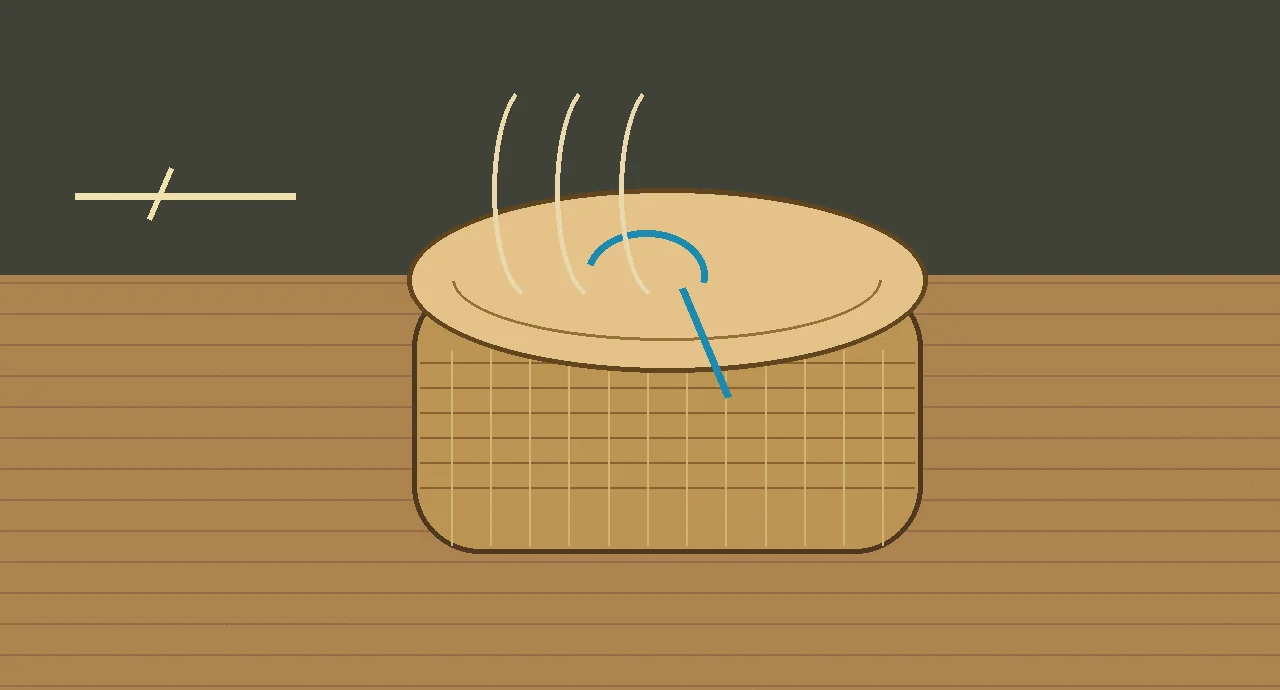
The preparation drawing keeps the lid and the unfinished order in view.
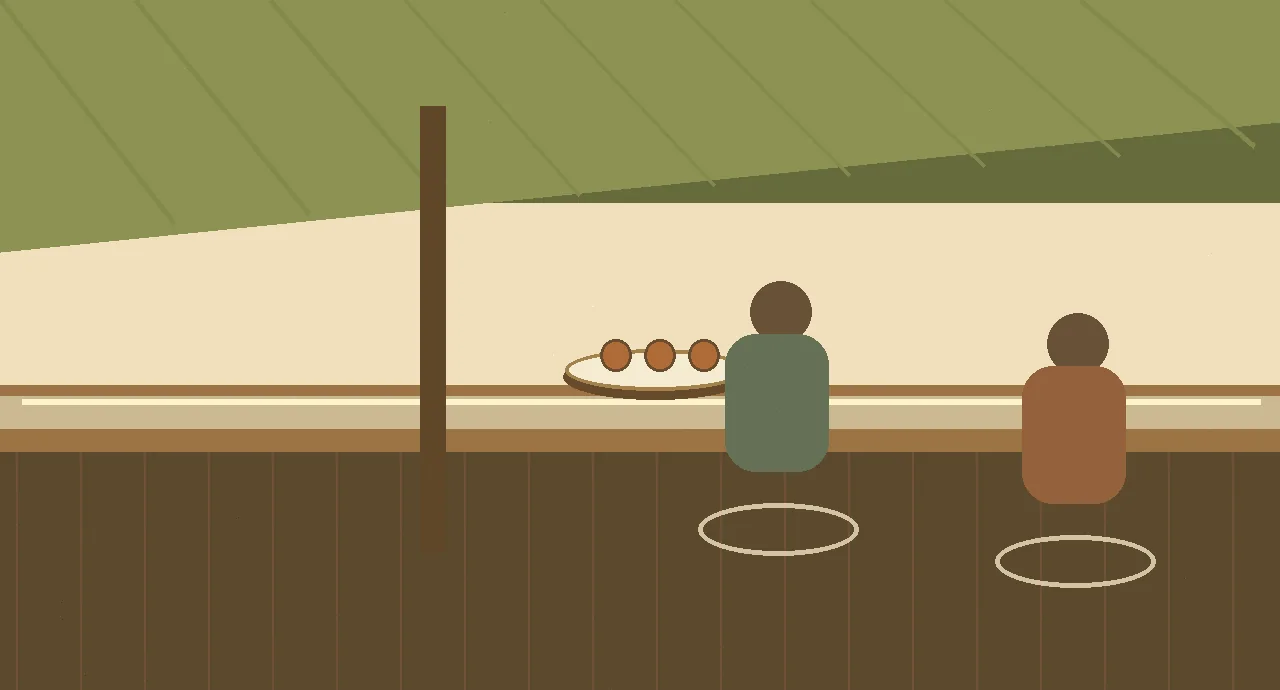
The street drawing shows who can reach the space on the shelf.
Comparison Tray
Choose a preparation and a serving drawing.