
Leave a Trace After the Last Tray
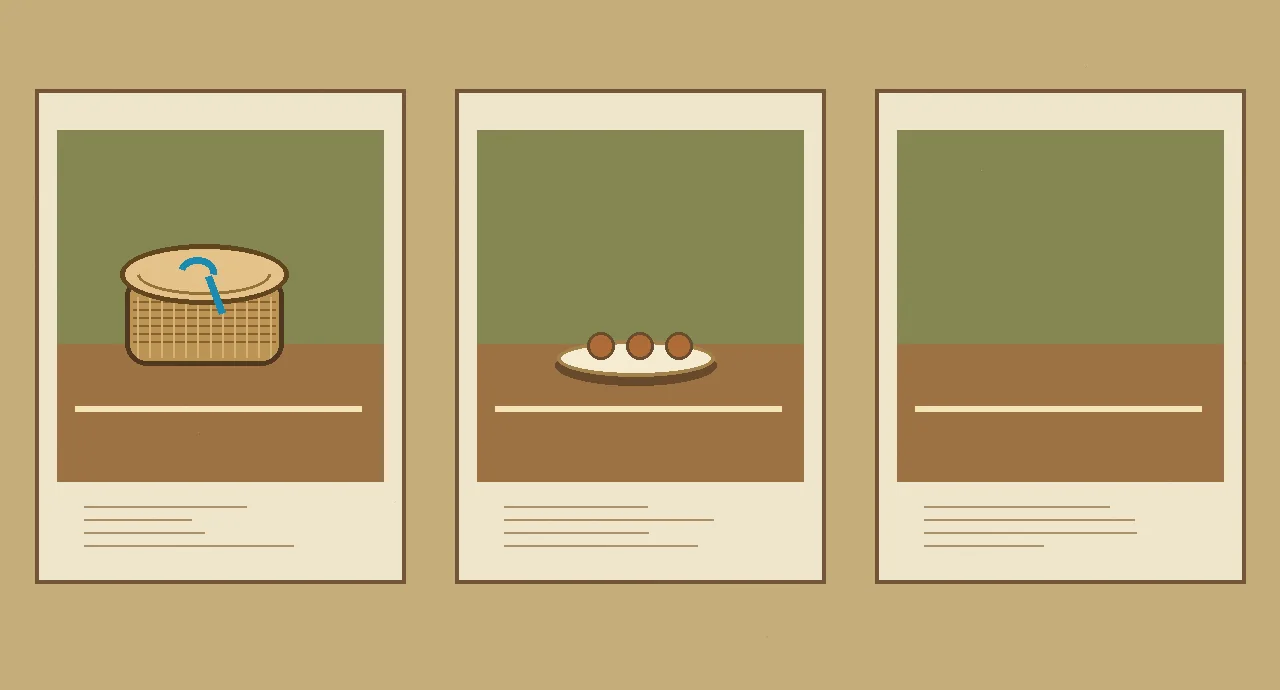
A counter can seem to reset at the end of a morning. At the start of a turn the shelf holds an order. A person steps forward, reaches for the tray and moves away. The next frame shows the stripe and an empty board. From that last image alone it can be hard to tell whether the order went to the right person, whether the visitor changed position, and whether the slot is now free for the next order. The easiest scene to draw can be the least informative one to read.
For A Place on the Serving Shelf, the result needs to be visible after the act of collecting is over. We keep a trail of three drawings. One shows the arrangement just before the vendor chooses a place. A second holds the turn where the tray goes down. The last shows the open surface beside the figure that has left the waiting position. The trail is short enough to compare by moving left and right, and each frame continues to show the portion of the shelf that mattered.
Preserve one reference across the row
In the first pass, the recap began with a wide street view, zoomed in on the hands, then ended on a cropped board. Each panel made sense by itself. Reading across the row was harder because the stripe changed angle and position in every drawing. The viewer could identify the tray going down and still be unsure whether it occupied the same space they saw in the first picture.
The next row uses the post and the sharp corner of the shelf as fixed reference points. The hands can appear in a closer inset when the player needs them. That inset sits beside the unchanged view. Keeping the corner visible gives the three panels a common edge from which to compare before, action and result. The last image can return to the wider street without erasing the part of the shelf where the decision occurred.
Make it possible to compare without a motion cue
An animated preview is helpful when the scene is short, but a reader needs a way to stop at the part that matters. We give each frame a named position and keep the numbers beside the pictures. A player using a keyboard can select the preceding drawing and come back to the result. The captions identify the changed object in each frame, including a plain statement that the tray was collected once the record is complete.
The captions should be short enough to read beside a picture. If they must explain why the two visitors changed places, we need to put that change in the row. A note beside the waiting outline can identify who moved. The action and consequence should have their own positions so a player who pauses between them can say which mark changed first.
Return to the preparation record
The same principle matters in The Lid with a Blue Tie. A basket can leave the frame when the vendor carries it forward. If the player returns to the original view, the next useful clue may be the still-visible chalk stroke beside the order. One mark continues across frames, even when the object it was near is somewhere else. Recording which view held the mark helps the player find it again when they go back.
The morning editions follow the chronology of changes within each volume. That date order should survive as more drawings are added. A reader who opens a close view from Basket Tests can use the published article to return to the earlier drawing and see what changed. The records keep a decision visible after the object that made it important has left the shelf. That is the same work we want the short recap to do in the game.