
Call the Next Waiting Place
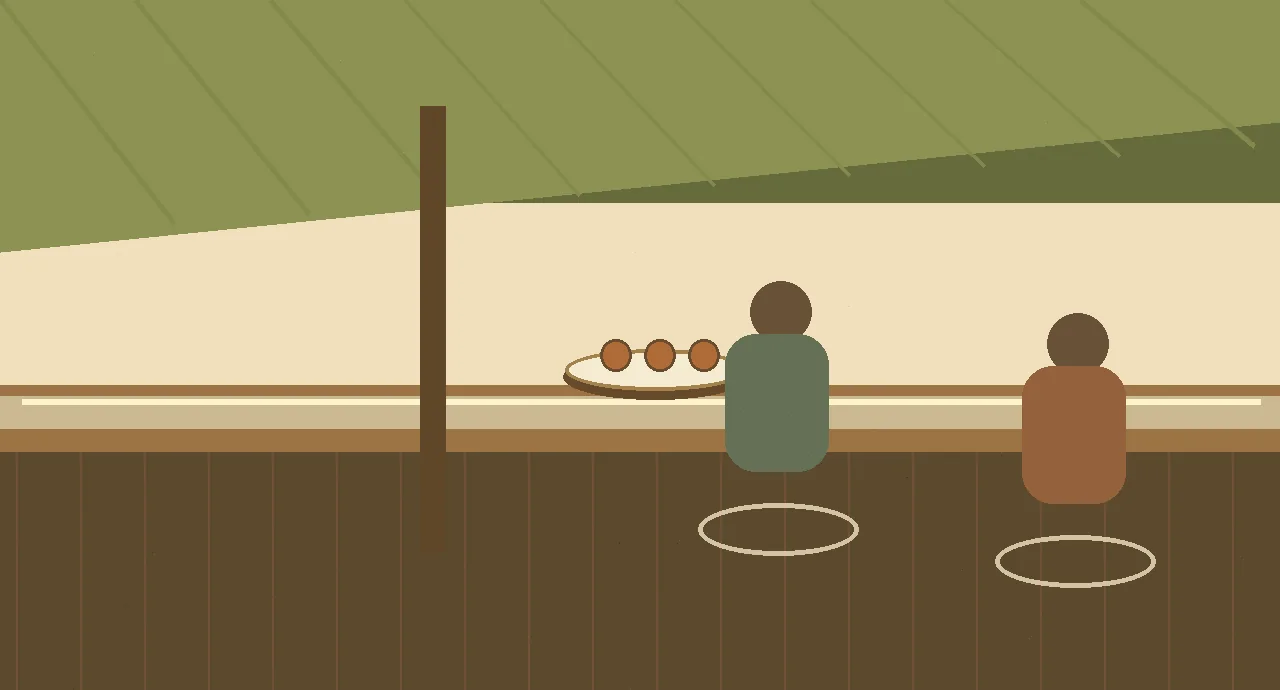
From the street it is easy to see a person beside the post. It is harder to tell whether they are coming forward because they heard their order or because the person ahead of them has just left. In a scene with two orders, those actions can look almost identical. The prototype can make them different by retaining the shape of the waiting area and allowing the vendor’s call to appear before the next movement.
A Place on the Serving Shelf includes a turn in which two visitors can reach the same part of the counter. We have been drawing the moment before that reach. The visitor near the post is ready to collect their order. The visitor in the center is ready to step closer. The game needs to make both true in the same picture.
Keep the call beside the place
A first draft set the call in a window above the whole drawing. Somebody looking at the post had to lift their attention to the top of the screen, then find the same figure when the call ended. On a phone that trip was particularly disruptive because the call could occupy the space where the shelf needed to be. The next version places a short call beside a fixed waiting mark. The text also appears in the turn record beneath the picture so it can be reviewed at the same pace as the other decisions.
We use the same words for a recorded call and its visible caption. The player can read the sequence without audio. If a sound is available, it can reinforce timing, but a silent visitor sees the same order and location. The waiting mark stays in place during both the call and the response. The next turn begins when the player is ready to move it forward.
Show the move after the cue
The difficult case is the person who steps toward the counter while the other visitor turns to pick up the tray. If both figures cross the center at once, the player can see that the queue changed and still have trouble saying why. We keep one view with the call visible and the figures in their starting places. The next view records the moment after the movement. Moving back to the earlier view restores both the call and the earlier positions.
This also gives the level a way to show a repair. If the player offers a tray in the middle while both visitors are close, a subsequent turn can hold the tray at the near edge while the two waiting marks become readable again. The prototype treats that wait as a visible turn. It gives the board and the shelf a chance to agree before the next order enters the scene.
Recheck the preparation angle
In The Lid with a Blue Tie, the vendor might not see all the way to the ground marks. We bring the call across the two views by showing which part of the shelf the vendor has assigned, then showing the waiting position when the player looks from the street. The change of angle should add a piece of information. It should leave the order that was called in the same place in the record.
During a playtest, ask a reader to stop just before someone moves. They can point to the figure they expect to act and explain which mark led them there. That explanation tells us more about the interface than whether the action happened quickly. A guess based on the color of a coat can happen to be right once. A response that refers to the call and the fixed position can stay useful when the same visitor appears in a different place later in the morning.